

New Yield Calculation Method for Professionals
We continue to evolve together with the community and, as you may have noticed, we have updated some of the information in our strain descriptions. In particular, we are introducing a new way of calculating yield: the expert method.
The “expert method” is more up to date and practical, especially when modern equipment is used. In this article, we explain why.
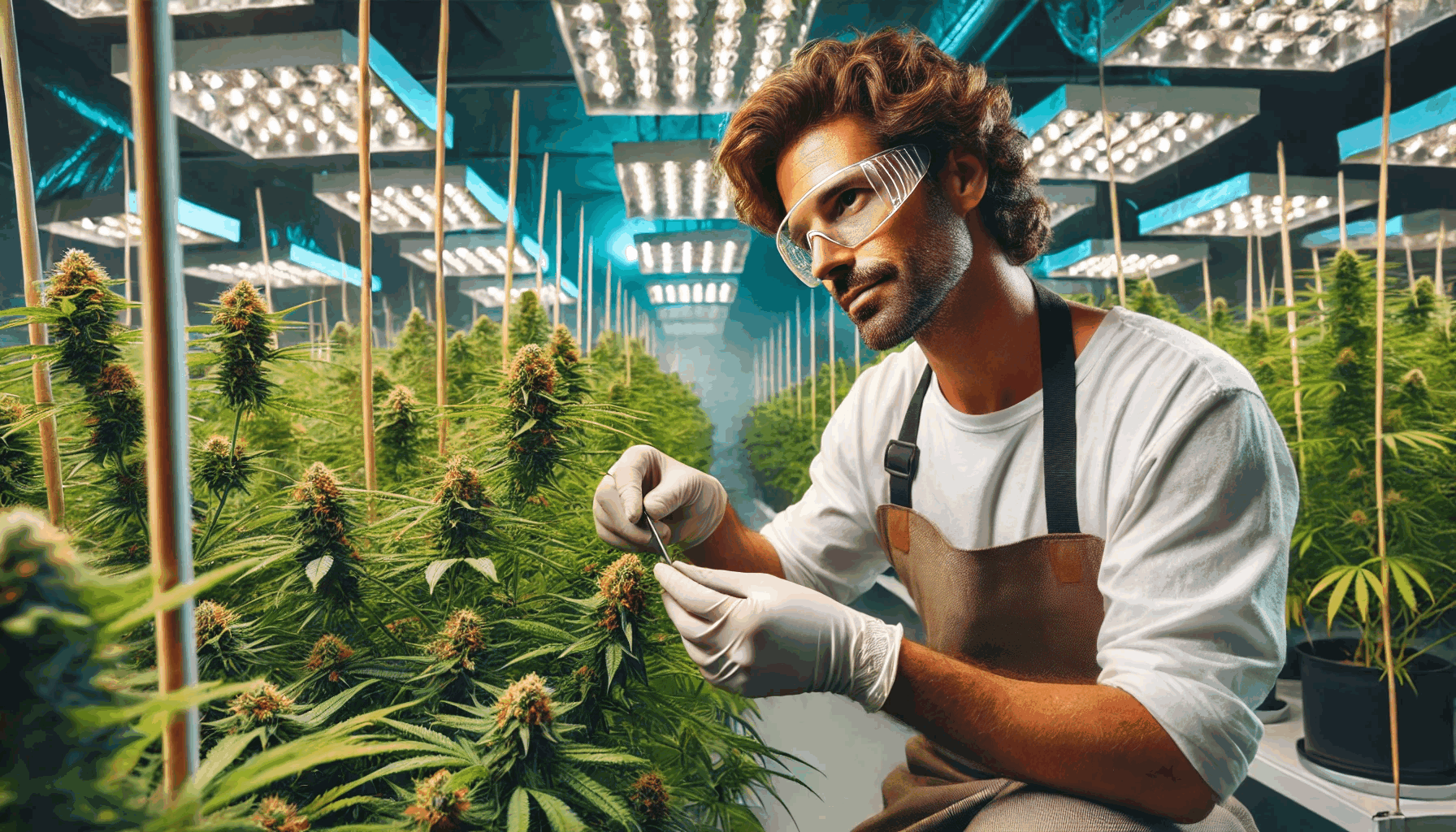
Over the years of legalization, cannabis cultivation, particularly its technical aspects, has advanced considerably. While old-school growers used HPS lamps, the vast majority now prefer highly efficient LED grow lights for a variety of reasons.
What are the disadvantages of HPS lamps, and what advantages do LED lights offer?
Energy Consumption
HPS lamps consume a great deal of energy, with the costs becoming particularly noticeable when using models rated at 600 W or more. LED lights help reduce expenses thanks to their long lifespan, low energy consumption, and lack of additional equipment. HPS systems require cooling ventilation, a cooltube, a ballast, and an ignitor, all of which involve additional costs.
Spectrum Adjustment
Unlike HPS lamps, the spectrum of LED lights can be adjusted for the different stages of plant development. This promotes greater vegetative growth during the vegetative stage and helps produce more abundant yields during flowering.
Temperature and Distance from the Plant
HPS lamps reach extremely high temperatures, which can rise to 400 degrees inside the bulb. Such a high operating temperature requires the light to be kept far away from the leaves to prevent burning. This means taller grow boxes are needed and creates a large amount of unused air space.
The heat produced by HPS lamps often requires serious cooling measures, as most grow boxes and grow tents are installed inside ordinary apartments. High outdoor temperatures also create additional difficulties during the summer.
LED lights generate far less heat and make it possible to convert a tall greenhouse into a vertical growing facility. An even more cost-effective option is to build a lower greenhouse from the outset.
Service Life
HPS lamps are affected by ageing. Their efficiency decreases by 30% in just one year. In practice, for much of their service life, they emit only 50–60% of the stated luminous output. To achieve good cultivation results, the lamps must therefore be replaced frequently, which can be very expensive, especially when using 600 W or 1000 W models.
Installation, Space, and Positioning
HPS systems require time and effort to install and connect all their components. With an LED light, you simply hang it using the supplied carabiners and mounting equipment, plug it into a socket, and adjust the spectrum required by the plants. HPS systems also take up more space because of their additional components. Space must be found for the ventilation system and the magnetic or electronic ballast.
Noise
HPS systems are noisier because they require additional ventilation. LED lights are cooled by integrated, quiet fans.
The choice of LED lighting is therefore clear, as demonstrated by its enormous popularity.
The key factor when choosing a grow light is how many flowers you want to harvest from each plant.
- 25–50 grams of flowers per plant = 50 W per plant;
- 50–100 grams of flowers per plant = 100 W per plant;
- 100 grams of flowers or more = 150 W or more per plant.
Most growers cultivate between 1 and 6 plants. Although it is easier to manage a small number of plants at a time, growing more plants makes it possible to cultivate a greater variety of strains and achieve higher yields.
Growing only one plant at a time creates a single point of failure. If something happens to that plant, you have no others left.
In summary, achieving an abundant harvest from a larger number of plants requires a powerful grow light rated at no less than 600 W.
Like many other growers, we use Lumatek lights with a power rating of between 600 and 720 W. This is precisely the amount of light designed for an area of 1.5 m². Modern grow tents are manufactured in proportion to the number of lights and take their coverage area into account:
- 60 × 60 cm — up to 150 W
- 100 × 100 cm — up to 400 W
- 150 × 150 cm — from 600 W to 1000 W with a good cooling system
It is therefore now more relevant to calculate yield for an area of 1.5 m². For the convenience of our customers, we have added a yield estimate for this area to our strain descriptions.
The standard calculation for 1 m² is still available on the website, but when using modern LED grow lights, we recommend referring to the expert calculation method.
Read also


Strains from this article


- -15%


- -15%


Comments
No comments yet. Be the first.