- Alex Sterling
- News
- 0 likes
- 0 comments
2025 has been a landmark year for Pyramid Seeds. The company introduced three new collections at once — GOLD Line, Fast, and Regular. Each reflects the brand's evolutionary approach: from working with rare terpenes to developing ultra-stable solutions for both commercial and private growers.
Instead of a dry report, we decided to review the year with the person closest to the genetics — Pyramid Seeds' lead breeder. We discussed the state of the industry, the success of Purple Urkle x Blue Pyramid, and why "marketing in a box" is losing ground to real selection work.
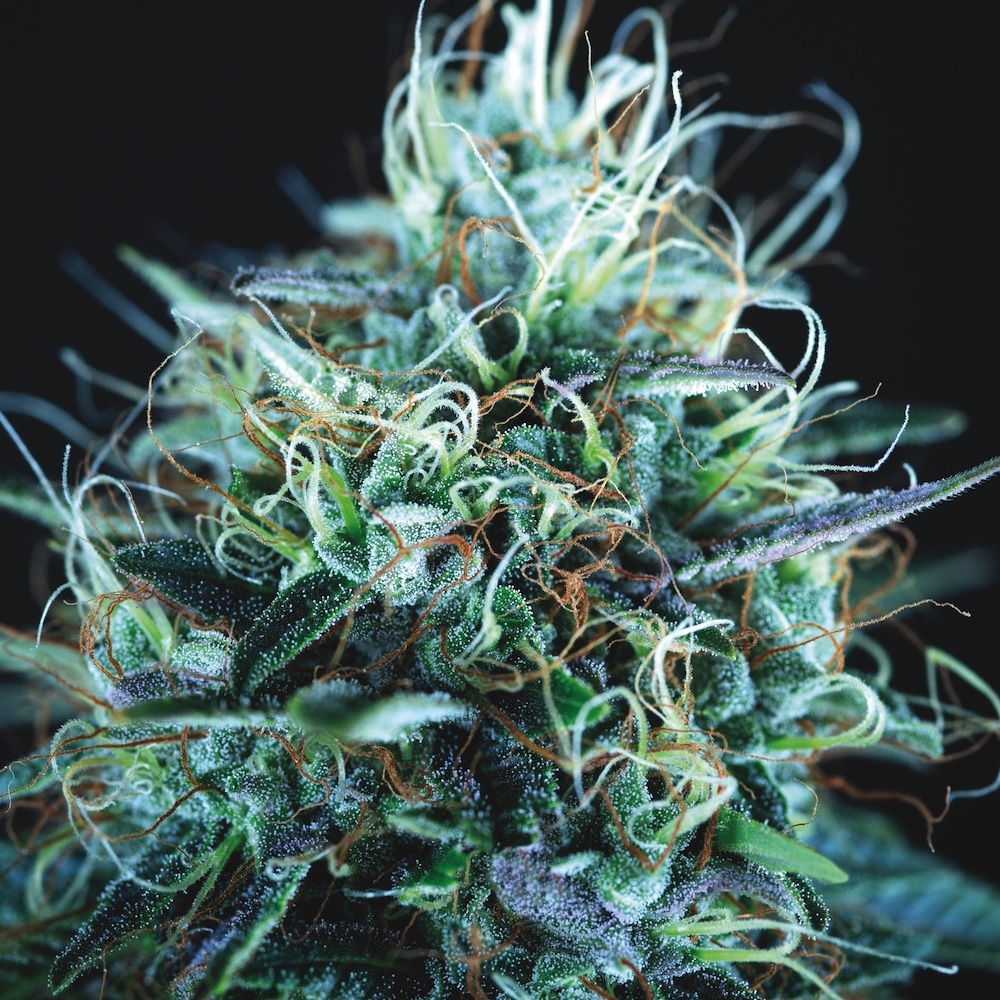
Seed Market Trends in 2025: Marketing vs Genetics
Hi! 2025 is coming to an end. Shall we talk a bit about what this year has been like?
Hi, let’s try. But fair warning: I’m not great at conversations — unless my interlocutor is a plant (laughs).
No worries. Let’s talk only about what’s close to you. And here’s where I’d like to start. You’ve surely heard people talking about the cannabis seed market being overheated. What do you think about that?
Of course I’ve heard it. Not just heard it — we feel it very clearly. The market is overheated, and it’s visible not only in the number of brands, but also in the number of “new” strains. There are more and more of them, names are getting louder, THC levels more extreme. Sometimes it feels like there’s more marketing than actual breeding.
At Pyramid Seeds, we try to preserve the culture on which this industry was built, rather than simply chasing hype.
Because when you know how to read genetics, you quickly realise that behind many attractive commercial names, the same foundations are often hiding.
Do you think that’s a bad thing?
I think everything has consequences. I’ve been working at Pyramid Seeds since the company was founded, and I’ve been breeding for most of my life. Over time, you stop seeing the packaging and start seeing the structure — where things come from, what was crossed with what, and why. And then it becomes clear that today the industry has a lot of wrappers and very little real work.
The biggest problem is that beginners find it hard to tell the difference. They see bright marketing, expect one thing, and get something else. And if there’s no real quality behind it, disappointment comes very quickly. And then — consequences follow.
Are you afraid that growers might disappear as a species?
Not exactly like that. But let me explain. The cannabis world is going through a period of transformation. Go to any specialised website — the range is overwhelming. I swear, if I were a beginner today, my head would explode just trying to choose.
Every month, “new strains” appear. Yes, it creates a feeling of constant progress, but you understand that in many cases it’s more of an illusion.
In this dynamic environment, it’s easy to get lost, especially for those who have recently entered the culture. New generations of growers often begin their journey already immersed in social media, trends and visual noise. They don’t always know the pioneers of the market, don’t always understand who stood at the origins of breeding and why, and often base their choices primarily on packaging and presentation.
Sometimes there really is quality and real breeding work behind it. But unfortunately, not always.
And that’s a dangerous moment for the entire industry. Because when flashy marketing isn’t followed by real results, young enthusiasts may become disappointed — not with a specific brand, but with the culture as a whole.
So for you, cannabis culture is not just about consumption?
Not at all. Absolutely not. And that’s probably where the main misunderstanding lies today. Cannabis culture isn’t about “use and move on”. It’s about a journey. Observation, patience, mistakes, waiting for results. It’s about creating something with your own hands and gradually understanding the process.
For me, a grower is not a consumer, but a creator. Someone who learns to read the plant, understand genetics, conditions and nuances. That’s where respect is born — for the culture and for the product itself.
When everything is reduced to packaging and fast effects, that connection is lost. And without it, cannabis becomes just another commodity, even though it’s actually a much deeper story. I would really hate for the new generation to miss that.
So what should be done?
Be responsible in what you do.
For example?
I believe that any seed bank must take responsibility for what it releases to the market. It doesn’t matter whether it produces its own seeds or buys and resells them — it must stand behind its product.
Pyramid Seeds 2025 Releases: GOLD Line, Fast and Regular Collections
Alright. And how does a breeder’s responsibility translate into Pyramid Seeds’ decisions?
Look. What is a strain?
To me, it’s not just a name or a nice story. A strain is a promise. And if you make that promise, you must be sure you can keep it.
We don’t release dozens of “fillers” every year. We prefer a slow, conscious approach. Depth of work matters more to us than the number of releases.
A good example is 2025. Instead of chasing yet another set of “new” names, we introduced the Fast and Regular lines, based on our own genetics that have already stood the test of time. We know their behaviour, their character, their strengths and weaknesses. We understand how they perform in different conditions because we’ve lived with these strains for many years.
We don’t experiment at our customers’ expense — we offer formats we trust 100%. That’s what responsibility in breeding looks like: not loud, but real.
Legends and Bestsellers: Tutankhamon and Black Cherry Punch
Tutankhamon remains one of Pyramid Seeds’ most iconic strains. What is the secret behind its longevity?
The secret of Tutankhamon lies in its extreme stability and predictability. It is a benchmark that delivers exactly the effect people fell in love with many years ago. This is what we call “honest genetics”.
It’s a clear example of how well-built genetics can remain relevant for years.
And which American strain ultimately became the bestseller? Black Cherry Punch?
How did you know? (laughs) Yes, since its release this strain has confidently held its place at the top and hasn’t lost momentum. It has a very successful combination: a distinctive American profile, rich flavour, and a powerful yet comfortable effect. It’s one of those strains that works immediately and keeps working over time.
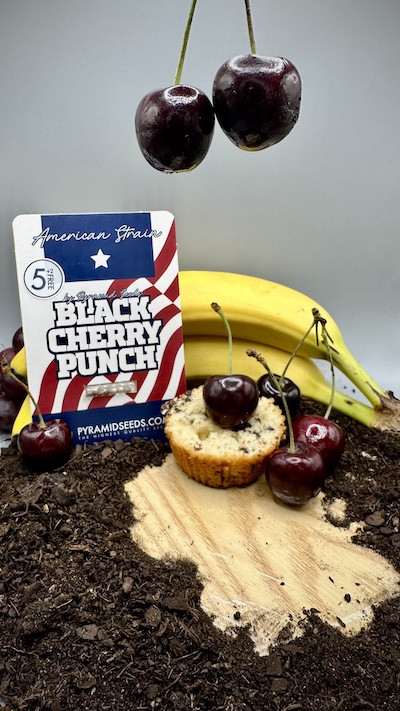
Last year we released the autoflowering version of Black Cherry Punch, and it naturally joined the success of the photoperiod version. It’s not a replacement and not an attempt to replicate success — it’s a logical continuation. We simply transferred the character of the strain into a different format while preserving its DNA. And judging by the feedback, this was exactly what people were looking for.
Black Cherry Punch is a great example of how modern American genetics can perform consistently and honestly when there is real breeding work behind it — not just a loud name.
Heart Notes: why terpenes matter more than high THC
By the way, Black Cherry Punch Auto made it into the Heart Notes collection. Why?
Because Heart Notes is a collection built around terpenes and the sensory experience. You know? It’s not about a “hard hit” — it’s about mood and body perception.
That’s a pretty unusual concept for a seedbank. Why did you decide to create a collection like that?
Because we can see how the culture is changing. More and more people are interested not only in potency, but in how a strain feels and what kind of mood it creates.
Are these cannabis strains for sex?
Let’s put it this way: these are strains that support relaxation and focusing on sensations. If you want to explore new layers of intimacy and emotional openness, Heart Notes is a very precise choice.
Purple Urkle x Blue Pyramid’s success on The Cannex 2025
Purple Urkle x Blue Pyramid made The Cannex list of the best strains of 2025. Did you expect that?
Seriously?
You didn’t know?
Look, bro, I’m a breeder, not a marketer. I don’t follow that stuff. What am I supposed to say — that I knew? (laughs)
Just say it straight.
I didn’t know — but I’m happy about it. It’s a strain from our Gold Line.
And it’s worth noting that this line was also a 2025 release.
Bro, for me this line isn’t a “2025 release” at all. (laughs)
For me it’s the result of years of work, not just a release tied to one specific year. Years of work. Literally years.
When you’ve been breeding for a long time, you stop thinking in seasons and releases. You live in cycles — crossing, selection, tests, selection again, tests again. Sometimes you think the strain is ready, and then you realise it needs more time.
So what is Gold Line to you?
Honestly, one of the best investments we’ve made in the entire history of the company. Not in terms of money — in terms of energy, experience, and patience.
I know for a fact the boss doesn’t pay anyone to get into rankings and cups, and he doesn’t pay for wins. That’s a matter of principle for him.
So when strains like this make lists like The Cannex, for me it’s not about a checkbox or “recognition”. It’s confirmation that we weren’t doing all of this for nothing. That the long road is sometimes appreciated.
Then in a couple of words — what’s special about Gold Line?
I can answer in a couple of words by saying what it doesn’t have. It has no random decisions.
Purple Urkle x Blue Pyramid is not “let’s cross two loud names” — it’s deliberate work with character, aroma, and depth of effect.
The result is a very balanced combination: a powerful indica-dominant base with a light, uplifting accent at the beginning, a deep relaxing side, and a rich flavour bouquet — berries, fruits, earthy and creamy notes.
THC in Purple Urkle x Blue Pyramid reaches 27%, making it one of the strongest strains in our line. But it’s not a strain that’s only about power. A pronounced terpene profile makes the effect complex and enjoyable — not just “harsh”.
- Genetics: Indica-dominant (80% Indica / 20% Sativa)
- THC: up to 27% (very high)
- CBD: low
- Color: unusual (✓)
- Yield (Indoor): up to 500 g/m²
- Yield (Indoor, LED 1.5 m² 720W): 800–900 g
- Yield (Outdoor): up to 1.5 kg
- Aroma: earthy, creamy, fruity, berries
- Effects: deep relaxation, euphoria
- Difficulty: easy
- Flowering time (Indoor): 55–60 days
- Flowering time (LED): 48–53 days
Is it likely also the best-selling strain in the Gold Line?
Oh, that’s not really my department. That’s something you’d better ask the sales team. (laughs)
Entering Brazil and Kazakhstan: expanding our geography
By the way, speaking of sales! At the end of 2025 you launched direct sales from the official website in Brazil. How is the brand being received there?
Well, I don’t know every detail. I only know that Pyramid Seeds is very popular in Brazil. At fairs our booths are always packed. That feels really good.
People there have cosmic energy. Incredibly grateful. And you know, it’s important to see that your work is appreciated.
Did you talk to growers there? What can you say about them?
Yes, of course. And honestly, I have a very warm feeling toward Brazilian growers. They’re people with huge enthusiasm and genuine interest in the process. They often don’t have perfect conditions, but they do have the desire to understand the plant, experiment, and get the most out of what they have.
I like that they pay a lot of attention to flavor, aroma, terpenes. Plus, they have a very lively community — people share experience, discuss, argue, learn from each other.
In a way it’s a very “pure” scene — lots of passion and curiosity. But unfortunately, also a lot of mistakes.
What do you mean?
I mean that many mistakes there happen not because of laziness or carelessness, but because of lack of experience and the noise around it all. Too much contradictory information, social media advice, “magic recipes” that don’t actually work.
People grab everything at once, want fast results, jump from one method to another. Sometimes the issue isn’t even the conditions — it’s not having the patience to let the plant do its thing.
And cannabis is very honest: you either understand the process or you don’t — and it shows you immediately.
But I still see huge potential. Mistakes are part of the path. If there’s interest and willingness to learn, everything else comes with time. And Brazilian growers are absolutely fine on that front.
The biggest grower mistake: how to germinate seeds properly (breeder’s tip)
Give an example of the most common mistakes. Let’s be useful. They’ll read this and stop doing them.
The most common mistake I see again and again is germination. People too often drown seeds in water and think it will be faster or more reliable. And then they’re surprised when something goes wrong.
I read a letter from a grower in Brazil. He said he already has experience — and he always does it like this: puts the seeds in water and leaves them there. But that method is Russian roulette. You never know whether it’ll work or not.
I have experience too. A lot of it. And I’m against that kind of game.
Here’s how I see it: it’s a person’s choice. But when you step away from official recommendations, the grower takes responsibility for that decision. And I can easily explain why.
A seed needs moisture and oxygen, not a bath. When you fully submerge it, it can simply suffocate — especially if it stays there too long. Water pushes oxygen out, the shell softens too sharply, and the seed loses its chance to start properly.
That’s why we always recommend the damp paper towel method. It’s simple and reliably consistent. The towel should be moist, not soaking; the seed sits between layers, gets moisture and still “breathes”. It wakes up naturally, without stress.
It sounds small, but healthy plants start with small things. And if the start is done right, you’ll see noticeably fewer problems later on.
- Damp paper towel method: use two damp (not soaking!) paper towels.
- Air access: place seeds between the towels in a closed container, but leave a little air.
- Darkness and warmth: keep in a dark place at 22–25°C.
I’ve heard about this problem more than once, and I know very respected people have recommended the water method.
My friend, in this context there’s no one more respected than nature. No one.
In nature a seed doesn’t sit fully submerged in water for days. It ends up in a moist but aerated environment — soil, where there’s both moisture and oxygen. That’s the key point.
The water submersion method can work — sometimes. Especially if everything is done very carefully and timed precisely. But the risk is higher. Hold it a bit too long and the seed simply doesn’t get oxygen. And beginners usually don’t feel that moment.
So when we give recommendations, we always base them on the most reliable, repeatable result. The damp paper towel method forgives mistakes, gives the seed both moisture and air, and minimizes stress. For beginners it’s the safest option — and the only one we officially recommend.
So I’d put it like this: there are different approaches, but if we’re talking about practice and responsibility toward people who are just starting out, it’s better to recommend what consistently works for most.
Agreed. Especially with new markets, you have to be extra careful. By the way, are there any other countries where you’ve appeared — or plan to appear?
You’d better ask the boss that question.
You’re not interested in that?
I just think everyone should do their own job!
Now our seeds can be bought in Kazakhstan! Please add a link in the interview to our partners.
you can now buy Pyramid Seeds in Kazakhstan through our official partner — GrowMarket.kz .
Questions from followers: honest, no marketing
Deal! Now a new section — questions from followers. Ready?
Depends whose followers. Yours?
No. We asked followers of Pyramid Seeds’ Instagram to send us their questions. We picked the three most interesting ones and we’ll ask you.
Okay… Sounds like responsibility. Let’s try. (laughs)
Do you have purple strains for sale?
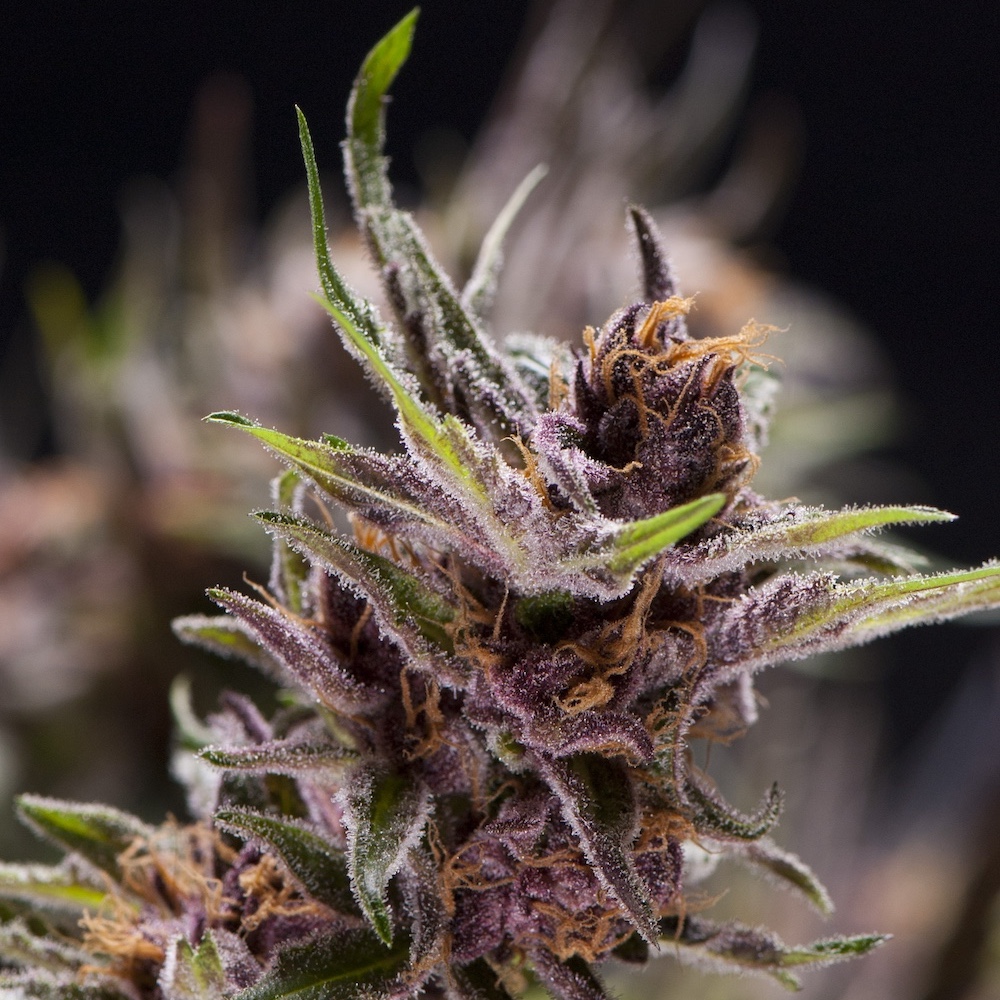
Yes, of course. And it’s not just one or two “for show” — it’s a full selection.
But I want to say one important thing right away: purple color isn’t magic and it isn’t an Instagram filter. It’s a combination of genetics and conditions. We always honestly point out strains that have real coloring potential, not just a pretty name.
For those who are looking for exactly that kind of genetics, we have a separate selection of rare and visually expressive strains.
<
Are F1 hybrids planned for release in 2026?
Good question. And a difficult one.
We’re watching the F1 topic closely and we understand why it’s so talked about right now. But it’s important not to get ahead of yourself. F1 isn’t just a flashy label on a pack — it’s a very strict breeding discipline.
If we do F1, we’ll do it properly. Which means: no rushing. So I’d say this: we don’t rule the format out, but if it appears, it will only be when we’re sure it matches our standards — not just the trend of the year. That said, I can definitely tell you: in 2026 you’ll see something new!
Does it happen that a breeder chooses a strain “for themselves”, not for the market?
(laughs) Of course. And honestly — that’s how it almost always starts.
First you make a strain for yourself. Because you like the aroma, the character, the effect. Because you’re interested in working with it. And only later, if it passes all tests and proves its stability, it can go out into the world.
So if a strain is made only for the market — you can feel it right away. The plant is as honest as the grower.
instagram.com/pyramidseeds.official
Thank you to everyone who was with us this year — growers, partners, beginners, and those who’ve been here from the start. May 2026 be calm, stable, and generous with great results.
Happy New Year!

Comments (0)
New comment